SEO for Restaurants: Menus, Reservations and Local Discovery
Diners search by craving and place, then pick the restaurant whose menu reads, reservations work and hours are true. How menus, booking and local discovery win the table.
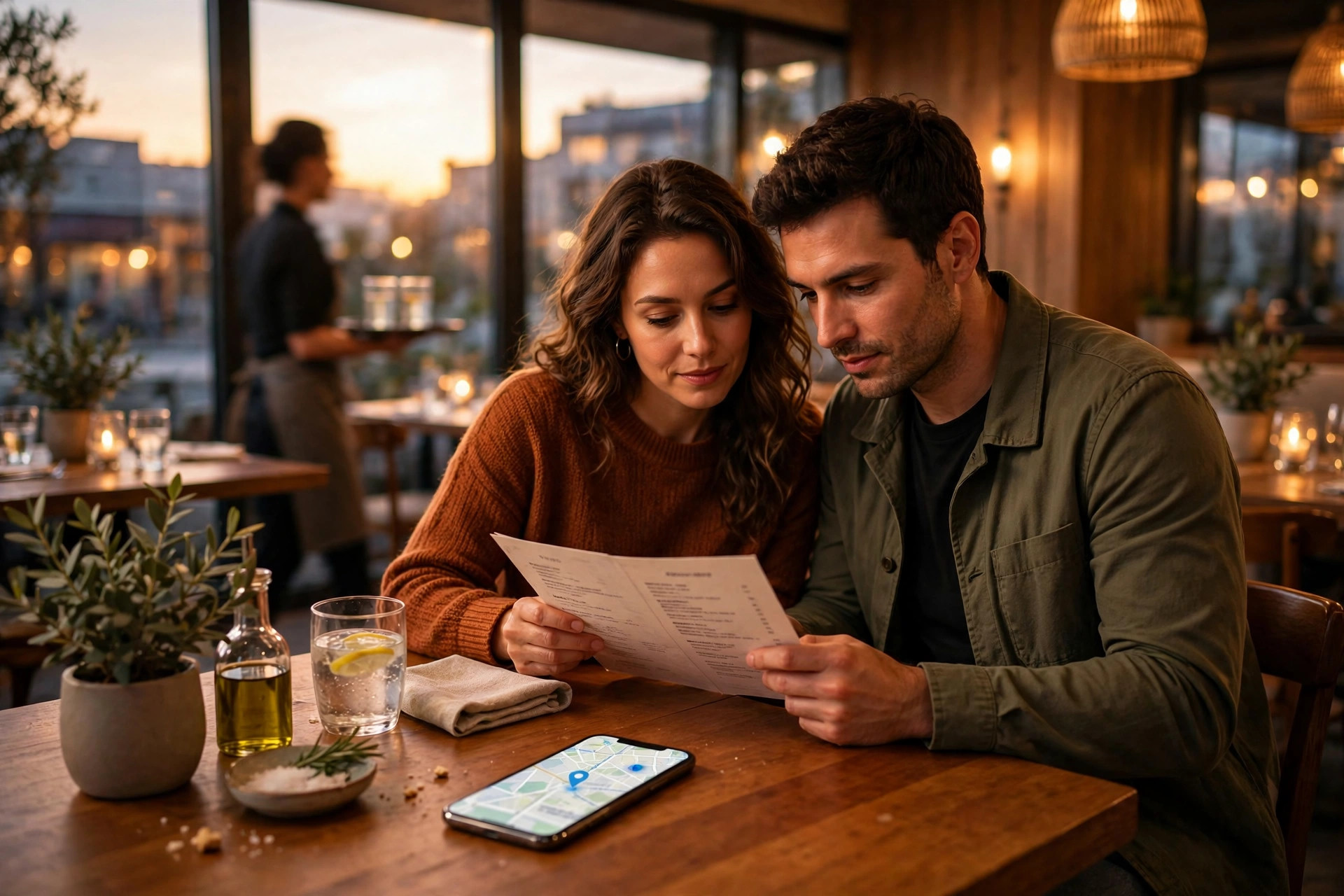
Nobody plans a meal the way they used to. A diner does not open a phone book or walk past your door by accident. They search. They type a craving and a place — “ramen near me”, “best brunch downtown”, “halal restaurant open now” — and they pick from whatever appears first with a readable menu, a reservation button that works and hours they can trust. The restaurant that wins is rarely the one with the best food in the city. It is the one whose search presence answers every question before the diner has to ask it. This guide explains how restaurant SEO actually works: how menus, reservations and local discovery fit together, and what to fix first so the next person searching for a meal finds yours.
How diners actually find a restaurant now
Restaurant search is almost always local, almost always on a phone, and almost always decided in minutes. The diner is hungry, in a place, and choosing between a handful of options. They are checking four things: what you serve, whether you are open, how much it costs and whether they can get a table. If any of those answers is missing, buried or wrong, they move on to the next listing without thinking about it. That is why restaurant SEO is different from most other local SEO: for a restaurant, the searcher is deciding with their stomach, and patience is measured in seconds.
The search itself usually takes one of three forms. The first is a craving search: a dish or cuisine plus a place, like “tacos near me” or “vegan restaurant in Austin”. The second is a name search: someone heard about you and checks the details before committing. The third is a discovery search: a map, a list or a “best of” roundup, where the diner is browsing rather than choosing. A good restaurant search presence serves all three: menu content for the craving search, accurate hours and a working reservation link for the name search, and reviews and photos for the discovery search.
Your Google Business Profile is your front door
For most restaurants, the Google Business Profile is the single most important search asset, and it costs nothing. It is what appears in the map pack, in the knowledge panel and on the map itself, and for many diners it is the first and only version of your restaurant they ever see. Treat it like the front door: accurate, welcoming and current every single day.
Start with the basics and keep them true. Your name should be your real trading name, nothing more. Your address and phone number must match what is on your website and everywhere else the restaurant is listed. Your hours need to reflect reality, including the kitchen closing time if it differs from the door closing time, and holiday hours should be updated before the holiday, not after it. A diner who drives across town because your listing said open and finds a dark dining room will not come back, and may leave a review saying so.
Then use the fields most restaurants leave empty. Choose the right primary category and add useful secondary ones. Fill in the attributes that matter to your diners: outdoor seating, wheelchair access, delivery, takeaway, reservations, dietary options, family friendly. Add your menu link, your reservation link and your ordering link as separate links, so each one is one tap away. And post on the profile regularly: a seasonal dish, a new opening time, a holiday closure.
The menu is a search asset, not a PDF
The menu is the page your diners care about most, and it is the page most restaurants handle worst. A scanned PDF, a photo of a chalkboard or a menu buried inside an image cannot be read by a search engine, cannot be found by a diner searching for a dish, and loads slowly on a phone. If your menu only exists as a PDF, search engines see a blank page where your best content should be.
Publish the menu as real text on a real page, with each dish as its own line of readable content. That is what lets a search for a dish lead to your restaurant. Use the words diners actually type. If your dish is a “smash burger”, call it that on the page, not only a clever invented name. You can keep the creative name, but put the plain description beside it so both the diner and the search engine know what it is. Keep prices on the page too. Diners decide with prices in mind, and a menu without prices creates one more reason to look elsewhere.
Keep the menu current. A seasonal menu that still shows last season’s dishes is a small broken promise. When a dish changes, the page changes the same day. If you run a set lunch menu, a tasting menu or a weekend brunch, give each its own section so it can rank for its own searches.
Reservations: making the booking path visible to search
A reservation button that works is a conversion asset. One that a search engine cannot see, or that sits three clicks deep, is a missed table. Link to reservations from your Business Profile, your homepage and the menu page, so the diner who has just decided to come never has to hunt for how to book.
If you use a booking platform, do not let it become the only version of your restaurant on the internet. Booking platforms rank well and they will take the booking, but they also take a fee and they keep the customer relationship. Your own site should be the place that ranks for your name and your dishes, with your own booking link front and centre. If you take bookings by phone, make the number tappable on mobile and answer it during the hours you claim to be open. A phone number that rings out during service hours is the same as a closed door.
Walk-ins matter too. Say so clearly. “Walk-ins welcome, reservations recommended on weekends” is a sentence that answers a real question and stops a diner from guessing. If you do not take reservations at all, say that plainly and explain the wait instead of leaving the diner to discover it at the door.
Location pages and neighbourhoods
Diners search by place, not by postcode alone. They search for a neighbourhood, a street, a landmark or a station. A restaurant with one location should still speak the language of its neighbourhood: the area name as locals use it, the nearest well-known landmark, the parking situation, the walk from the nearest station. That is not keyword stuffing. It is the information a diner needs to decide whether getting to you is worth it.
Restaurants with more than one location need a page per location, each with its own address, hours, menu variations, phone number and reservation link. Each location also deserves its own Business Profile, because the map pack is location-specific: a diner searching near your second branch should see that branch, not your flagship across town.
Reviews: earning them honestly and answering them
Reviews are the loudest signal in restaurant search. They influence the map pack, they influence the diner, and they are the one thing a restaurant cannot buy its way around. The honest way to earn them works: ask happy diners, at the right moment, in person. A short printed note on the bill, a line from the server when a table is clearly delighted, a follow-up message after a reservation — these are normal, allowed and effective. What is not allowed is paying for reviews, writing them yourself or offering a discount in exchange for one. Platforms remove fake reviews, and diners can smell them.
Answer reviews, all of them, and answer them like a human. Thank the happy diners briefly and specifically. For a bad review, apologise for the experience, say what you will do about it and invite the diner back through a private channel. The answer is not really for the reviewer. It is for the people who read it afterwards and decide whether your restaurant is the kind of place that cares.
Schema: helping search engines understand a restaurant
Structured data is how a search engine knows you are a restaurant and not a recipe blog or a food shop. The Restaurant type carries the facts that matter: name, address, phone number, hours, cuisine, price range and whether you take reservations. The Menu type, with its sections and items, lets search engines understand your dishes and their prices. Together they make your listing eligible for richer results that show menus, hours and reservation actions directly in search.
Keep the structured data honest and identical to what is on the page. If the markup says you are open until eleven and the page says ten, you have created a contradiction that a search engine will resolve against you. If the markup lists a dish you no longer serve, you are advertising a meal that does not exist. Validate the markup after every change and re-check it whenever the menu or the hours change. The point is not to trick a search engine into a richer result. It is to give it the facts in a form it can use, so it shows your restaurant accurately.
Technical foundations that decide whether any of it ranks
None of the above matters if the site is slow, broken on a phone or unreachable. Most restaurant searches happen on a mobile connection, often while the diner is already out, and a menu page that takes ten seconds to load is a menu page that never gets read. Keep images compressed, keep the page light, and test the site on a real phone on a mobile connection, not only on office wifi. Make the phone number, address, hours and reservation button visible without scrolling, and make the address open the map app with one tap.
Keep the site secure and the details consistent everywhere. Your name, address and phone number should be identical on your website, your Business Profile, your booking platform and every directory that lists you. Small inconsistencies quietly weaken local rankings over months, so check the main listings once a quarter.
Measuring what matters: calls, reservations, direction requests
Restaurant SEO is not measured in rankings alone. A number one ranking that brings no bookings is a vanity metric, and a third-place ranking that fills tables is a success. Measure what a full dining room depends on: calls from the Business Profile, reservation clicks, direction requests, menu views and visits from local search. Your Business Profile reports the first three directly, and your booking platform reports reservations and where they came from.
Watch those numbers weekly and look for patterns rather than single days. When something moves, check the obvious causes first: hours changed by accident, a reservation link that broke, a profile suspended for a policy reason, a competitor that opened across the street. Most restaurant SEO problems are not mysteries. They are a detail that changed and nobody noticed.
The bottom line
Restaurant SEO is not a campaign. It is the daily discipline of being findable, accurate and bookable: a complete Business Profile, a menu that search engines can read, a reservation path that works, honest reviews answered like a human, and a fast site that puts the phone number and the booking button where a hungry diner can reach them. Restaurants that do this consistently fill tables from search, because they have answered every question the diner asks before the diner has to ask it. Start with the profile and the menu, fix the booking path, then keep the details current — that is the whole job, done every week. This article is educational guidance on restaurant SEO; rankings, reservations and covers vary by market, competition and execution, and nothing here guarantees a position in search results or the map pack.
Recommended products
Keep reading
- Local SEO for Multi-Location BusinessesTemplated local pages don't have to be thin. Here's how to scale without duplicate-content risk.
- Local SEO in 2026: Win the Map Pack on Google Business ProfileThe local pack is where local revenue lives. Here's how multi-location brands win it in 2026.
- SEO for Real Estate Websites: Listings, Local Pages and Map SearchBuyers search by place first and property second. Here is how real estate sites win the map, the local pack and the listing page at the same time.
Explore the full Zeshly product suite, read more on the Zeshly blog, or head back to the homepage.
Ready to put this into practice?
Spin up Zeshly free for 14 days and ship the playbook above on your own site.